This story was originally published in the GenZeal feature of LNP on Sunday, January 18, 2026.
By Olivia Hernandez ‘26
Humans have been thinking for themselves since the beginning of time. We have not only been thinking, but discovering, inventing and living as our own people. Recent developments in artificial intelligence threaten to undercut these abilities.
In 2022, ChatGPT, a generative AI chatbot from OpenAI that uses large language models to generate human-like text and to have conversations, was officially released as a public research preview and gained much attention from students all over the world. This was just the start.
Amid this creation and many others, we’ve known that AI doesn’t exist without the ability of the human mind. We don’t need AI and it certainly has no place in any educational setting.
Jai Glazer, in an article for the Harvard Independent, writes of ChatGPT: “If students are given a tool that will do the work for them and spit out the answer, they are simply not going to learn as well as they would if they were required to independently problem-solve.”
When used in schools, AI takes away from open minds and free thoughts. It takes away from critical thinking, intuitive analysis and problem-solving — just three of the many skills that are crucial for students to learn while they are being educated throughout their youth.
According to a 2023 Pew Research poll, only about 6% of American public school teachers said they believe AI tools do more good than harm in K‑12 education.
In a world where a job as vital as teaching seems to be becoming obsolete, we must protect that profession and its aims. Without teachers, there would be no mathematicians, no scientists, no writers. Without the pure power of real knowledge, we, as a society, have no intelligence at all.
In a 2023 blog post, AI enthusiasts Pat Lawlor and Jerry Chang write of its benefits: “Artificial intelligence has the potential to improve productivity, boost creativity and enhance the human experience.”
Realistically, AI isn’t going anywhere. The problem has never been AI itself — the problem is that the tool is forced into places where it can do far more harm than good. Educational settings are vulnerable places. We must protect natural thinking, learning and living. The first step is taking AI out of this equation. We don’t need artificial intelligence when we, as humans, have always been made of the real thing.
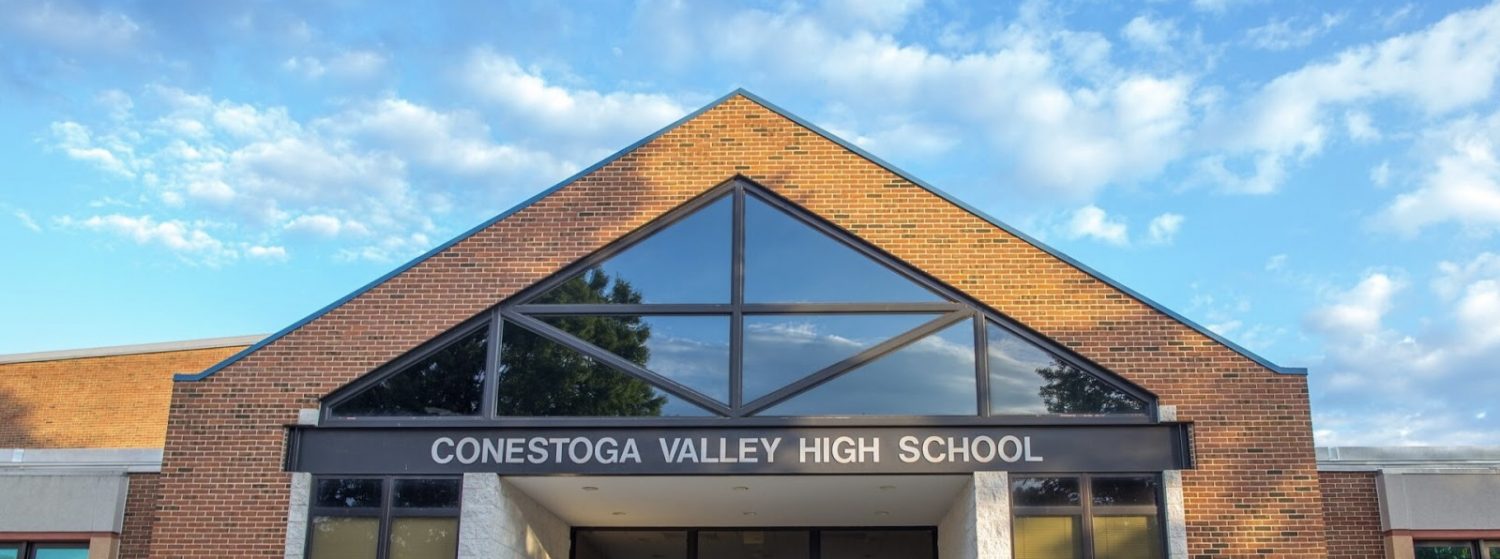
AI has no Place in an Educational Setting
This story was originally published in the GenZeal feature of LNP on Sunday, January 18, 2026.
By Olivia Hernandez ‘26
Humans have been thinking for themselves since the beginning of time. We have not only been thinking, but discovering, inventing and living as our own people. Recent developments in artificial intelligence threaten to undercut these abilities.
In 2022, ChatGPT, a generative AI chatbot from OpenAI that uses large language models to generate human-like text and to have conversations, was officially released as a public research preview and gained much attention from students all over the world. This was just the start.
Amid this creation and many others, we’ve known that AI doesn’t exist without the ability of the human mind. We don’t need AI and it certainly has no place in any educational setting.
Jai Glazer, in an article for the Harvard Independent, writes of ChatGPT: “If students are given a tool that will do the work for them and spit out the answer, they are simply not going to learn as well as they would if they were required to independently problem-solve.”
When used in schools, AI takes away from open minds and free thoughts. It takes away from critical thinking, intuitive analysis and problem-solving — just three of the many skills that are crucial for students to learn while they are being educated throughout their youth.
According to a 2023 Pew Research poll, only about 6% of American public school teachers said they believe AI tools do more good than harm in K‑12 education.
In a world where a job as vital as teaching seems to be becoming obsolete, we must protect that profession and its aims. Without teachers, there would be no mathematicians, no scientists, no writers. Without the pure power of real knowledge, we, as a society, have no intelligence at all.
In a 2023 blog post, AI enthusiasts Pat Lawlor and Jerry Chang write of its benefits: “Artificial intelligence has the potential to improve productivity, boost creativity and enhance the human experience.”
Realistically, AI isn’t going anywhere. The problem has never been AI itself — the problem is that the tool is forced into places where it can do far more harm than good. Educational settings are vulnerable places. We must protect natural thinking, learning and living. The first step is taking AI out of this equation. We don’t need artificial intelligence when we, as humans, have always been made of the real thing.
Sources:
https://harvardindependent.com/counterpoint-why-ai-should-not-be-used-in-the-classroom/
https://www.trevormuir.com/blog/AI-Dilemma
https://www.qualcomm.com/news/onq/2023/11/the-positive-social-impact-of-ai#:~:text=AI%20has%20massive%20potential%20for,complex%20problems%20across%20many%20fields.