To most sophomores at Conestoga Valley High School, student government looks simple. Elections come and go. Names are announced. Posters come down. After that, the work disappears from view.
But according to the Class of 2028 officers, that disappearance is the story.
Behind closed doors and before the school day starts, student government becomes a constant cycle of meetings, fundraising deadlines, and conversations with adults who hold final authority. What looks like power from the outside is, in reality, responsibility without the spotlight.
Class President Clementine Johnson ‘28 learned that almost immediately. “Something I was surprised about is how much goes on behind the scenes. It’s a different role that comes with different responsibilities than I thought it would,” Johnson said. Fundraising, planning, and coordination now fill much of her role, work that rarely earns recognition but determines what the class can actually do.
One of the biggest tensions officers face is perception. Many students assume class officers control major decisions. Johnson says that assumption is wrong. “A lot of people think we make all these important decisions and that we are in charge of a lot of things, but in reality, we are using our class’s voice and getting that to the adults who will make something out of it,” she said. Power, in student government, is indirect. Influence matters more than authority.
Vice President Alexandra Frey ‘28 sees that same misconception play out daily. “People think that we make these huge decisions – we don’t do any of that. We mainly focus on meeting and communicating to the adults in our school,” Frey said. While students may only see results, officers spend hours discussing ideas that may never make it past the approval stage.
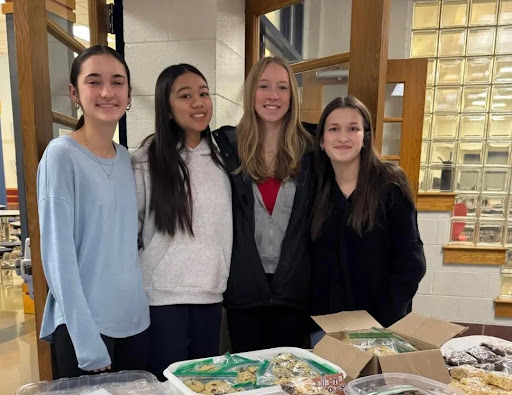
For Secretary Eliza Hess ‘28, the reality of student government became clear through workload. “One responsibility of my role that others may not see is that I need to take notes at every meeting,” Hess said. Fundraising adds another layer of pressure. “I didn’t expect to need to bake 90 cookies!” she said. Behind every event is labor that students rarely notice.
Treasurer Angel Obispo ‘28 carries the weight of making ideas financially possible. “Networking with other adults and students to reach fundraising goals and make events become reality” defines much of the role, Obispo said. Without that behind-the-scenes coordination, school traditions fall before they begin.
Still, none of the officers describe the work as pointless. What keeps them going is the understanding that their class depends on them. “The knowledge that the activities and things our class gets to do depends on us,” Obispo said. Hess agrees, emphasizing representation over control. “In reality, it is our job to represent our class to the teachers and administrators and make sure that our class’s voice is heard,” she said.
The class of 2028 student government is not a seat of power. It is a pressure point. Officers balance expectations from classmates with the realities of school administration, working quietly to turn student ideas into something real. What students see may be the result. What they do not see is the effort, compromise, and persistence it takes to get there.