By Leslie Buckwalter ‘27
Dust swallowed New York as sirens tore through Lower Manhattan and chaos took over the streets. Inside the wreckage of the September 11 attacks, Lamar Buckwalter pushed forward through debris, searching for life, knowing that 35 years as a firefighter had not prepared him for this.
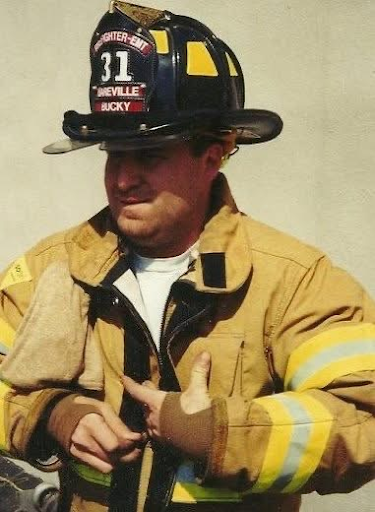
Buckwalter’s path began long before 9/11. At just 14 years old, he joined the fire service as a junior firefighter, inspired by his grandfather and his love for helping others. “My neighbor had a heart attack, and I wasn’t able to help him because I didn’t know what to do,” Buckwalter said. “So I wanted to learn.”
That desire quickly grew into a lifelong commitment. Over the years, he rose from a junior firefighter to an interior-qualified firefighter, then to lieutenant and captain. He later served as an assistant engineer and deputy fire chief before becoming a career rescue captain and returning to the ranks as a firefighter.
What kept him going, even after decades in the field, was simple: “It’s the love of the job, knowing that we’re there for somebody else.”
On September 11, 2001, Buckwalter was deployed to New York. When he arrived, the scene was unlike anything he had ever experienced. “It was chaotic,” Buckwalter said. “There were people running around, screaming and yelling.”
Thick dust filled the air, and debris covered everything. Initially assigned to search and rescue, he worked through the rubble looking for survivors. Later, he carefully operated heavy equipment to sift through debris and recover buried bodies.
But as hours passed, hope began to fade. Rescue efforts turned into recovery.
“We stopped more than we did anything,” he said, describing how often they believed they had found something. Only to discover fragments of bodies instead of survivors. The emotional weight grew heavier with each passing moment.
Exhausted and taking a short break, Buckwalter was approached by a little girl. Her words tugged on his heart, “My daddy’s in the rubble pile. You need to go find him.”
Despite being overwhelmed and burned out, Buckwalter pushed to keep going.
Buckwalter spent two weeks at Ground Zero, unable to contact his family due to damaged communication systems.
The experience left a lasting impact, both emotionally and professionally.
“I don’t take things for granted like I did,” he said. “I slowly proceed into it now, versus just jumping in.”
Where adrenaline once drove him, experience and reflection now guide him. He describes himself today as a “cool cucumber,” focused and controlled, always aware of how his actions affect both patients and fellow responders.
The job, however, still carries emotional weight. Certain calls and memories can trigger moments where he “freezes” briefly before regaining focus. Even years later, 9/11 remains difficult. “It’s a very, very hard day for me,” he admitted.
To cope, Buckwalter turned to counseling, his family, and his faith. Prayer became a constant before and after difficult calls, helping him process what he experienced and continue serving others.
“There’s been times where it’s like, ‘Okay, God, I’m not so sure I can do this,’” he said. “But you feel His presence…and you just keep going.”
Although there is trauma and challenges, Buckwalter continues to find purpose in his work. Whether responding to fires, accidents, or medical emergencies, he sees each call as an opportunity to help someone on their worst day.
Today, the dust has long since settled over Lower Manhattan, and the sirens that once tore through the streets have faded into memory. Yet for Buckwalter, the impact of that day never fully left. After decades in the fire service, the job has taken a toll, but it has also given him meaning, resilience, and perspective.
And in the end, it all comes back to the same reason he started. “It’s the love of the job,” Buckwalter said, “knowing that we’re there for somebody else.”